Time Series Anomaly Detection in Medical Break The Glass
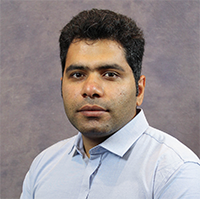 Qais Tasali is a Ph.D candidate at Kansas State University. His doctoral research is focused on access control in medical cyber-physical systems. He is also interested in computer communications (networks), distributed computing and information security. Qais is a Fulbright alumnus and has a master of software engineering (MSE) degree from Kansas State University. Prior to graduate work, he worked as an IT director at Kabul University, working to develop sustainable IT for public universities in cooperation with German Academic Exchange Program (DAAD) and NATO Science Projects (Silk-way) in Afghanistan. |
 Nikesh Gyawali is a Computer Engineer and worked as a Security Analytics Engineer for two years at LogPoint, a SIEM solution. His interest lies in the field of intersection of Artificial Intelligence/Machine Learning and Cybersecurity. He is currently a Computer Science PhD student at Kansas State University.
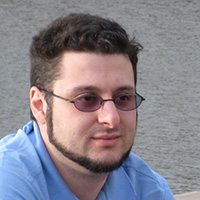 Eugene Vasserman is an Associate Professor in the Department of Computer Science at Kansas State University, specializing in the security of distributed systems. He is also the director of the Kansas State University Center for Information and Systems Assurance. His current research is chiefly in the area of security for medical cyber-physical systems, security usability, and user education. His past work spans the gamut from security vulnerabilities emergent from the BGP infrastructure of the internet, to energy depletion attacks in low-power systems, to secure hyper-local social networking, to privacy and censorship resistance on a global scale (systems capable of supporting up to a hundred billion users). In 2013, he received the NSF CAREER award for work on secure next-generation medical systems.
He spent the 2016-2017 academic year on sabbatical at the FDA, serving as a security subject matter expert, taking regulator certification classes, and organizing and running a public workshop focused on regulatory science gaps in the way medical device security is handled. He has served on numerous program committees, including USENIX Security, ACSAC, PETS, USEC, ASIACCS, HotWiSec, WPES, SecureComm, and chaired the 2014 USENIX HealthTech Summit. He is a member of the UL 2900 standardization process for cybersecurity of network-connectable devices, the AAMI interoperability working group, and the AAMI / UL 2800 standards effort for medical device interoperability.
Tags:
License: Creative Commons 2.5
Submitted by Anonymous
on