Scaling CPS Understanding
The intricate interplay of software, hardware, and multi-physics in large-scale cyber-physical systems (CPS) exceeds the cognitive capacity of even the most experienced engineers. Although standards such as SysML 2.0 improve how systems are organized structurally, they lack the deep semantic foundation necessary to prevent misunderstandings and late-stage failures. |
CSLib: Building a Platform for AI-assisted Formal Verification in Lean
| AI is revolutionizing the way code is written, but with more and more AI-generated code, the dangers of AI-introduced bugs and vulnerabilities are also increasing. At the same time, AI has also dramatically increased the capabilities of malicious actors, making even existing code more vulnerable. Fortunately, there is hope. The same GenAI power also shows promise in helping write formal specifications and in creating proofs, thus lowering the bar for formal verification. This leads naturally to a vision of a future in which AI only generates fully verified code. |
AI as an Enabler for Analyzing Business Logic Systems
Business Processes and Business Logic (BL) systems that govern and operationalize these processes are critical to both the US economy as well as the DoD mission. Logic faults in these systems have the potential to severely impact production of essential products or impede procurement of critical parts and services. For instance, a mismatch between a part tolerance in a manufacturing specification and the implementation of that specification in a manufacturing plan can cause numerous downstream effects, including shipment delays, recalls, or failures. |
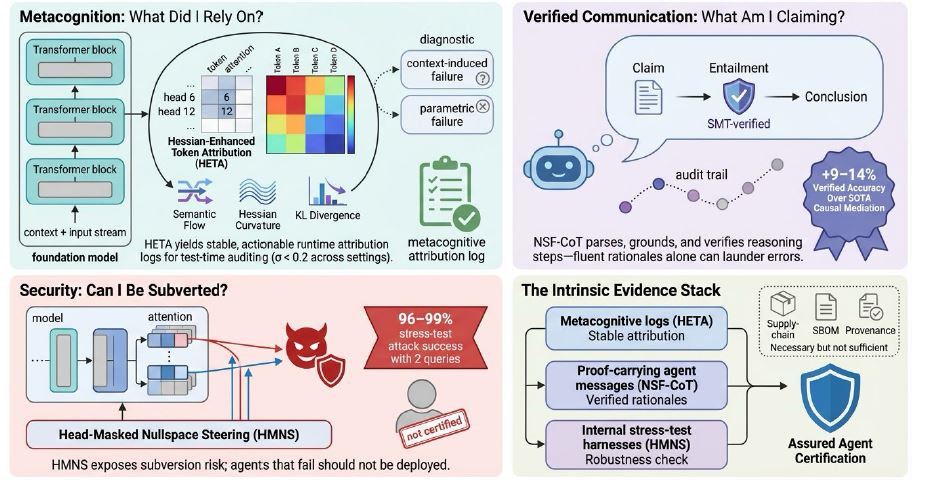
Intrinsic AI Assurance: Metacognition and Formally Verified Reasoning in Foundation Model Agents
Transitioning Assurance Case Technology to Production—an Experience Report
Transitioning Assurance Case Technology to Production—an Experience Report
|
The software certification and approval process has long been a challenge in the |
Submitted by Gerilynn Pearce
on
Marktoberdorf Summer School 2026: Engineering Secure and Dependable Software Systems
Marktoberdorf Summer School 2026: Engineering Secure and Dependable Software Systems
Applications are now open for the 2026 Marktoberdorf Summer School, a premier international program focused on engineering secure and dependable software systems.
Organized by fortiss and the Department of Informatics at Technische Universität München, and led by Peter Müller (ETH Zurich) and Alexander Pretschner (TU München, fortiss, bidt), the program brings together leading researchers and students to explore state-of-the-art approaches to building software systems that are both safe and secure.
Submitted by Katie Dey
on